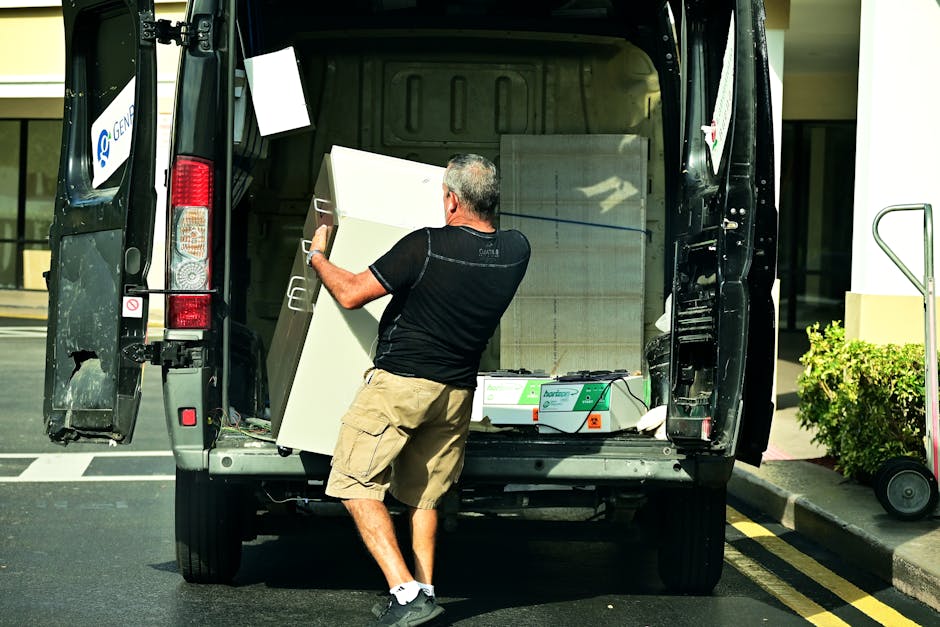
Kensington and Chelsea council moving permits for Holland Park
Posted on 31/07/2026

Kensington and Chelsea council moving permits for Holland Park: what you need to know before moving day
Moving in Holland Park sounds simple enough at first glance. Then you hit the narrow streets, the parking restrictions, the loading bays, the basement stairs, and that one awkward corner where a van just cannot sit without causing a fuss. That is where Kensington and Chelsea council moving permits for Holland Park come in. If you are planning a home move, an office move, or even a small delivery with a van, understanding the permit side of things can save you time, stress, and a very expensive headache.
This guide breaks down what moving permits are for, how they usually work in practice, why they matter in Holland Park, and how to plan around them properly. You will also find a step-by-step approach, a practical checklist, and a few real-world examples that make the process less mysterious. Let's face it, nobody wants moving day to be derailed by a parking ticket or a van circling the block for 20 minutes.
Why Kensington and Chelsea council moving permits for Holland Park matters
Holland Park is one of those London areas where logistics can look easy on a map and turn complicated the minute a vehicle arrives. Streets can be busy, kerb space is limited, and residential access is often tighter than people expect. In practical terms, that means a van can create problems quickly if it blocks traffic, sits in a restricted bay, or overstays where loading is only allowed for a short window.
A moving permit is not just paperwork. It is part of how you make the move fit the street rather than forcing the street to fit the move. For many residents, this is the difference between a calm loading process and a scramble involving wheelbarrows, extra carrying distance, and a frustrated driver trying to find a legal stopping point. If you are moving into a flat with limited access, you may already know how quickly delays stack up. Our guide to difficult access removals for basement flats touches on the kind of access problems that make permit planning so useful.
There is also a money angle, even if nobody likes to think about it. A permit or agreed parking arrangement can help reduce waiting time, minimise the chance of penalty charges, and keep your move running within the booked window. In commercial moves, that matters even more. A delayed office handover can ripple into staff downtime, missed deliveries, and a very grumpy facilities manager. Not ideal.
Quick takeaway: in a place like Holland Park, parking and access planning is not a side detail. It is a core part of moving day success.
How Kensington and Chelsea council moving permits for Holland Park works
At a high level, moving permits and parking arrangements are about allowing a vehicle to stop legally and safely close to the property for loading or unloading. The exact route to doing that can vary depending on the street, the property type, the time of day, and whether any suspension, dispensation, or other parking control is needed. The details matter, and in London they often matter a lot.
For a typical home move in Holland Park, the process usually starts with checking the street outside both the old and new addresses. Are there residents' bays, pay-and-display bays, yellow lines, red routes, or access restrictions? Is there room for a van to stop without obstructing traffic? Does the move involve a ground-floor house, a top-floor flat, or a basement property with a long carry? Those practical questions shape the permit request or parking plan.
In some cases, the move can be managed with normal legal parking if space is available and time is well chosen. In other cases, a formal arrangement is needed so the vehicle can remain close enough to keep loading efficient. If you are using a professional removals team, the transport side often gets matched to the site conditions. For example, a smaller vehicle may be more suitable for a tight mews, while a larger van might be better where loading time is short and items need to move quickly. For background on vehicle choice, you may also find the page on man with van in Holland Park helpful.
There is one point people sometimes miss: the permit is only part of the job. You still need to think about timing, lift access, stairwells, and whether the crew can carry items safely once the van is parked. A permit will not magically make a sofa lighter. Shame, really.
If you are unsure which services are relevant to your move, the services overview can help you understand how a professional moving plan is usually structured.
Key benefits and practical advantages
Good permit planning is not glamorous, but it is genuinely useful. Here is why people who move regularly tend to take it seriously.
- Less risk of fines or complaints: if a van is parked where it should not be, the move can become expensive and awkward very quickly.
- Faster loading and unloading: a nearby stopping point reduces carrying distance and helps the crew keep momentum.
- Better protection for fragile items: fewer steps, fewer turns, and less time outside usually means lower handling risk.
- Less stress on moving day: you are not improvising while boxes pile up in the hallway.
- Cleaner coordination with neighbours and building managers: a planned arrangement feels much more professional.
There is also a subtle but important benefit: permit planning helps you make realistic decisions about the rest of the move. If you know the van can only stop for a limited window, you pack differently. You prioritise the essentials. You do not spend half the morning trying to decide whether the lamp belongs in the first load or the second. That sort of detail sounds tiny until you are standing in the rain with a mattress and two boxes of books.
For many Holland Park moves, this planning pairs neatly with broader support such as removal services in Holland Park or full removals in Holland Park, especially where access is tight or timing is fixed.
Who this is for and when it makes sense
You may need to think about parking permissions or council-related moving arrangements if any of the following apply:
- you are moving into or out of a flat with restricted street access
- your road has limited stopping space
- the property is on a busy or heavily controlled street
- you are moving bulky furniture, appliances, or specialist items
- your move must happen in a narrow time slot
- you are coordinating with a concierge, managing agent, or building rules
This is especially relevant for people moving in and around Holland Park, where elegant streets often come with practical complications. Residents in newer apartments may face lift bookings and concierge rules. People in older homes may face tight access, steps, and long driveways. Students and short-term tenants may be working to a hard handover date. Businesses, meanwhile, may need office furniture shifted fast without interrupting the workday. If that sounds familiar, office removals in Holland Park is the kind of service page worth reviewing alongside parking planning.
It is also worth saying that not every move needs a formal permit. Sometimes a well-timed arrival, a small van, and a clear loading plan is enough. The trick is knowing which category your move falls into before the clock starts ticking. That part saves more grief than people realise.
Step-by-step guidance
If you want to handle Kensington and Chelsea council moving permits for Holland Park properly, use a simple sequence. Nothing fancy. Just solid planning.
- Check both addresses early. Look at the street layout, bay markings, yellow lines, and any obvious restrictions. If the building has a concierge or management office, ask about move-in rules as soon as possible.
- Measure the practical access. Note whether the van can get close enough for loading, whether there are steps, and how far items will need to be carried.
- Confirm the moving date and time. This matters because street conditions can change a lot between morning, school-run hours, and later in the day.
- Decide what vehicle size you actually need. A smaller van can be easier to place, while a larger vehicle can reduce the number of trips. There is no perfect answer for every move.
- Speak to your removal provider. A good team will tell you whether the move is likely to need a permit-related plan, a parking suspension, or just careful timing.
- Prepare the property. Move boxes to a central point, dismantle furniture where sensible, and keep hallways clear so the team can work quickly once the van is parked.
- Build in a buffer. London traffic is London traffic. One delayed delivery van or one double-parked car can knock the whole day sideways.
A small but useful habit: make a note of any door codes, intercom instructions, or loading entry points. It sounds obvious until someone arrives on site and realises the one person with the fob is still on a train. Been there, seen that, not fun.
If you are trying to work out which moving setup suits your place, the article on flat removals in Holland Park is a handy companion piece, especially for apartments and stair-heavy properties.
Expert tips for better results
Here are the tips that tend to make the biggest difference in real moves, especially in areas with controlled parking.
- Choose the quietest practical time: early starts often work better than midday moves, but check the street pattern rather than assuming.
- Keep the load plan simple: start with large, stable items and the essentials you need first at the new property.
- Label by room, not just by item: that helps the unloading side stay neat and faster. Surprisingly powerful, this one.
- Protect the route inside the property: floor protection and door checks matter just as much as the van space outside.
- Leave room for one surprise: maybe a sofa will not fit through the door first time, or a parking space will be occupied. It happens.
- Ask about insurance and safety practices: you want a moving team that treats access constraints seriously, not casually.
For a more detailed look at how a local operator handles practical moving-day issues, it may help to review insurance and safety and health and safety policy. Those pages are useful if you want to understand how risk is managed on site.
And yes, good packing still matters. Permit or no permit, a badly packed move is like a rainy Monday in London: tolerable only if you prepared for it properly.
Common mistakes to avoid
Most moving problems are not dramatic. They are little avoidable things that stack up. The good news is that they are usually fixable, if you catch them early.
- Leaving parking planning until the last minute: this is the big one. By then, your options are fewer and more expensive.
- Assuming every street is the same: one side road may be easier than the next. London can change character very quickly, sometimes by half a block.
- Booking a van that is too large for the access: bigger is not always better when kerb space is tight.
- Ignoring building rules: some properties need lift bookings, advance notice, or specific moving hours.
- Forgetting unloading space at the destination: a successful departure means nothing if the arrival point is blocked.
- Not discussing awkward items in advance: pianos, wardrobes, large mirrors, and fitted furniture need more thought.
If any of those sound familiar, you are not alone. The fix is usually a better briefing, a clearer load list, and a realistic timetable. For specialist or heavy items, look at piano removals in Holland Park or furniture removals in Holland Park so you can match the move to the item rather than forcing the item to fit the plan.
One more thing: if a company sounds vague about parking or access, that is worth paying attention to. Vague usually becomes expensive later.
Tools, resources and recommendations
You do not need a stack of complicated tools to manage a move well. What you need is a few reliable building blocks.
- A moving inventory: a simple list of large items, fragile pieces, and anything needing disassembly.
- Photo notes of the street and property entrance: useful for spotting tight corners, steps, gates, and bay markings.
- A packed-by-room labelling system: room names on every box make unloading smoother.
- Access notes: door codes, lift instructions, concierge contact details, and any restricted hours.
- A realistic quote request: a good estimate depends on the real circumstances, not just the postcode.
If you want a fuller picture of how to prepare, the pages on packing and boxes and package and boxes can help with the practical side of getting everything ready. A clear quote process also matters, so it is worth reviewing pricing and quotes before you book.
If you are still comparing providers, take a look at removal companies in Holland Park. Even a quick comparison can reveal which teams understand local access issues and which ones sound like they are winging it. You can usually tell.
Law, compliance, standards, or best practice
When moving permits, parking restrictions, and loading arrangements come into play, the safest approach is to treat compliance as part of the move, not as an optional extra. In London, street parking and loading rules are taken seriously, and local restrictions can vary by location and time. The exact permission needed depends on the street layout and the type of stopping required, so it is best not to guess.
Best practice usually means:
- checking local restrictions before the move
- keeping within agreed parking or loading times
- avoiding obstruction of traffic, cycle lanes, or resident access
- protecting pavements, doorways, and communal areas during loading
- using trained movers for heavy or awkward items
From an operational point of view, good compliance is mostly about preparation and communication. If the property has a management company, let them know the move date. If the road is tight, brief the driver before arrival. If you are moving something fragile, say so early. That is the real-life version of best practice, and it works better than hoping for the best.
If you want to understand how a local company approaches these responsibilities, the about us page gives useful context on the team behind the service. For broader policy and trust signals, pages like terms and conditions and privacy policy can also help.
Options, methods, or comparison table
There is more than one way to handle a Holland Park move. The right method depends on your street, vehicle size, and access needs. Here is a simple comparison to make the decision easier.
| Approach | Best for | Pros | Trade-offs |
|---|---|---|---|
| Standard legal parking where available | Easy access, low-traffic streets, flexible timing | Simple, quick to arrange, low admin | Not always possible in busy or restricted roads |
| Permit-based or controlled stopping arrangement | Moves needing a close vehicle position | Reduces carrying distance, more efficient loading | Needs planning and may depend on local conditions |
| Smaller van with flexible access | Basement flats, narrow roads, limited kerb space | Easier to place, often more adaptable | May require more than one trip |
| Full removals team with access planning | Large households, fragile furniture, time-sensitive moves | Less stress, better coordination, more support | Usually needs more detailed booking information |
For many local moves, a flexible man-and-van option works well. For others, a full moving crew is the safer bet, especially if the property has stairs, heavy furniture, or awkward access. If you are weighing up transport types, the pages for man with van, man and van, and removal van can help you think through the options in a practical way.
Case study or real-world example
Here is a realistic local scenario. A couple moving from a first-floor flat near the centre of Holland Park had a fairly standard load: bed frames, several boxes of books, kitchen items, a sofa, and a few fragile pieces. The street outside their building looked manageable on foot, but once they checked the road conditions properly, it became clear that parking directly outside would be tight during their chosen time window.
Rather than leave it to chance, they adjusted the schedule, chose a vehicle that could handle the access better, and prepared the load in advance. Boxes were labelled by room. The furniture was partly dismantled. The building manager was informed. On the day, the move still had a few little moments - a hallway snag here, a door frame check there - but nothing derailed the job. The van got in, the loading stayed controlled, and the whole process finished without a last-minute panic.
That kind of result is not magic. It is just good planning. Truth be told, most successful moves look a bit uneventful from the outside, and that is exactly what you want. If the day feels calm, the prep was probably done well.
For similar access-sensitive situations, you might also find the guide to Campden Hill removals and access useful, along with removals guidance for Holland Park Avenue moves.
Practical checklist
Use this checklist a few days before moving day. It is simple, but it works.
- Confirm both addresses and access details
- Check street restrictions and likely parking challenges
- Ask the property manager about move-in or move-out rules
- Choose the right size vehicle for the street and load
- Book the move with enough time to allow for access planning
- Label boxes by room and note fragile items clearly
- Disassemble large furniture where sensible
- Keep hallways and entrances clear
- Prepare keys, codes, and contact numbers
- Build in a small time buffer for traffic or access delays
If you are dealing with a very tight deadline, it may be worth exploring same-day removals in Holland Park. And if the move is tied to a tenancy change or student schedule, student removals in Holland Park can be a better fit.
One last practical note: if something feels off the week before the move, ask early. A quick question now is much better than a long apology on moving day.
Get a free quote today and see how much you can save.
Conclusion
Kensington and Chelsea council moving permits for Holland Park are not just a formal detail. They are part of making a local move safe, legal, and efficient. In a neighbourhood where access can be tight and parking pressure is real, a thoughtful plan can save time, reduce stress, and keep the whole day moving in the right direction.
The best approach is usually simple: check access early, plan for parking properly, brief your movers well, and avoid leaving key decisions until the last minute. If you do that, the move becomes much more manageable. Not perfect - moving rarely is - but manageable, and that is often enough.
And once the boxes are in, the kettle is unpacked, and the first room starts to feel like home again, the effort makes sense. Proper planning does that. It turns chaos into something calm enough to breathe through.